
Age and AI:
when bias becomes visual.
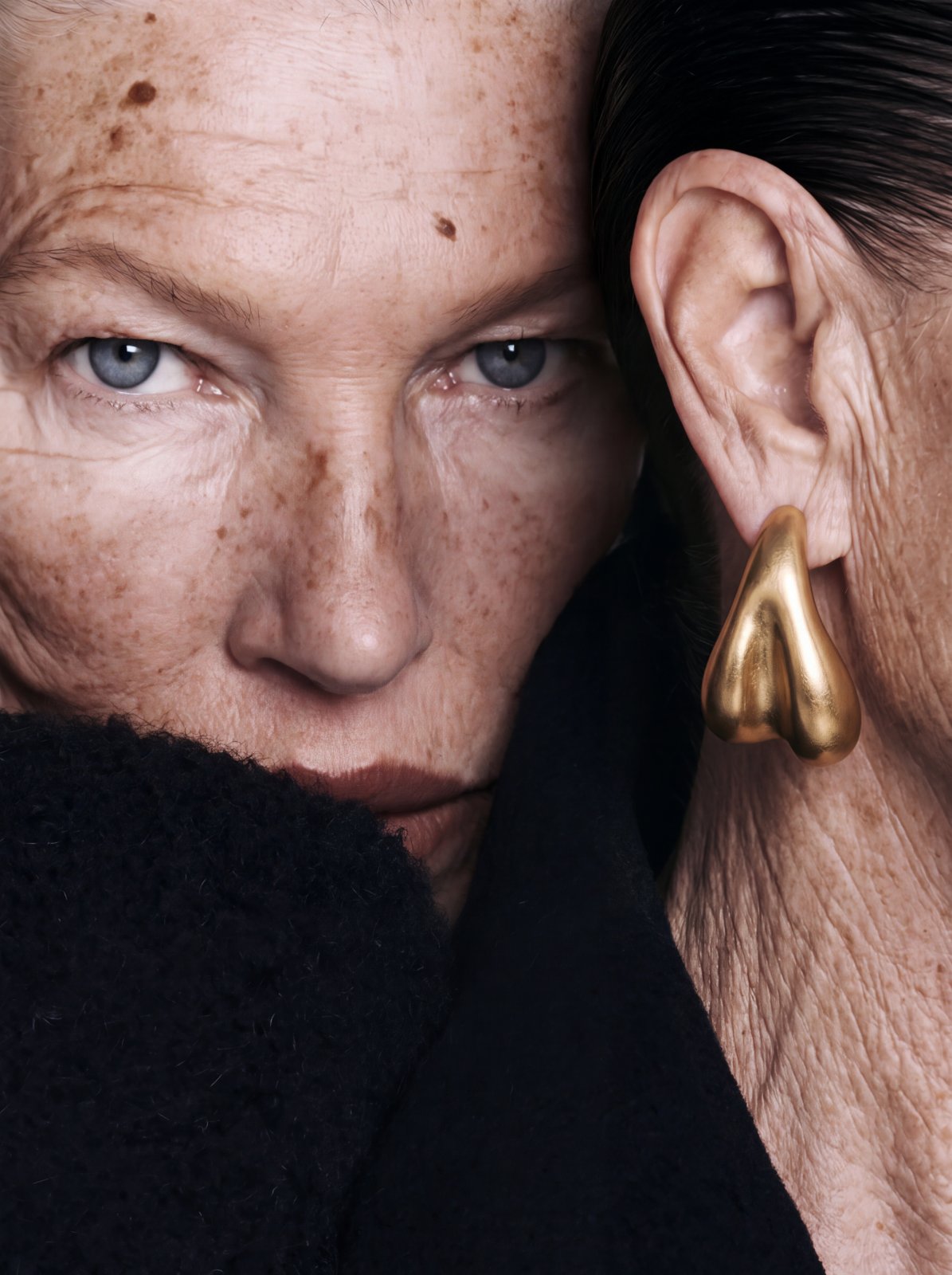
Fashion finally stopped being afraid of age. This year's runways filled with women in their 50s, 60s and 70s, gray hair in plain sight, wrinkles left untouched. Age treated as a value, not a flaw to correct. Artificial intelligence hasn't quite gotten there yet.
What "digital ageism" means
Some of us who work with these tools regularly have started calling a pattern we keep noticing "digital ageism": when you ask a generative model for an older face, it often comes back with less light, less sharpness and less detail than a younger one. It's not a one-off glitch in a single image. It's a tendency consistent enough to have earned a name.
I won't cite a specific figure or study if I can't verify it with confidence, but the observation itself is something anyone who directs AI images regularly can recognize: young skin tends to render with detail; older skin often gets "smoothed" toward a flatter version, as if the model treated age as noise to clean up rather than information to preserve.
Light, detail and skin are direction decisions
When I directed the image for this piece, the decision wasn't to generate "an older woman." It was deciding, specifically, which parts of that age would stay visible: that the freckles would hold, that the wrinkles wouldn't dissolve, that the skin would keep telling the age instead of hiding it. None of that happened by default. I had to ask for it, hold it through several iterations, and discard the versions where the tool — without my asking — started smoothing the texture toward a younger, "safer" look.
That, to me, is the core point: hard or soft light, level of detail, skin texture, every wrinkle and freckle that's kept or dissolved — these are direction decisions exactly like pose or framing. They're not a side effect of the technology. They're something someone decides, or fails to decide, and both choices carry consequences.
The tool didn't decide that. I did
It's tempting to think a generative tool frees us from creative responsibility. In my experience it's the opposite: the more powerful the tool, the more the decision of how to use it weighs. If I let a model's default bias decide how age looks in my images, that decision still gets made by someone — it's just not me, and it's probably not a conscious one.
Age is not an error for the tool to correct. It's a decision someone has to make. Pressing a button and directing an image are not the same thing, and that, to me, is exactly the difference between the two.
Why this matters for fashion, beauty and advertising
Fashion, beauty and luxury brands have been learning that representing age honestly is also a brand decision, not just an ethical one. If those same brands start leaning on AI production without conscious direction on this point, they risk undoing with technology what they just started building on the runway. Human, deliberate creative direction is what keeps that from happening.